
AC installation isn’t just setup—it directly impacts cooling efficiency, energy bills, and long-term performance.
Many homeowners focus only on buying the right AC but ignore the importance of professional installation and proper HVAC planning. Even a small mistake during installation can lead to higher energy consumption, uneven cooling, and frequent breakdowns.
In this guide, we will explain the most common AC installation mistakes that increase your cooling cost and how proper planning can help improve efficiency and performance.
Choosing the Wrong AC Size
Selecting the wrong AC capacity is one of the biggest mistakes during installation. Both undersized and oversized AC units can cause performance issues.
Undersized AC
Works continuously to cool the room, increasing electricity consumption and reducing lifespan.
Oversized AC
Turns on and off frequently, leading to inefficient cooling and higher energy usage.
Proper room analysis and heat load calculation are essential to select the right AC size.
Incorrect Placement of Units
Improper placement of indoor and outdoor units can reduce cooling efficiency and increase power consumption.
- Indoor unit exposed to direct sunlight
- Outdoor unit placed in a closed or poorly ventilated area
- Improper height or angle of installation
Correct positioning ensures better airflow, faster cooling, and lower electricity usage.
Poor Airflow Planning
Airflow plays a major role in cooling performance. Poor airflow design leads to uneven cooling and energy loss.
Blocked Circulation
Furniture or walls blocking airflow reduce cooling efficiency.
Improper Duct Design
Poor duct layout in commercial setups leads to uneven cooling.
Wrong Air Direction
Improper AC direction affects room temperature balance.
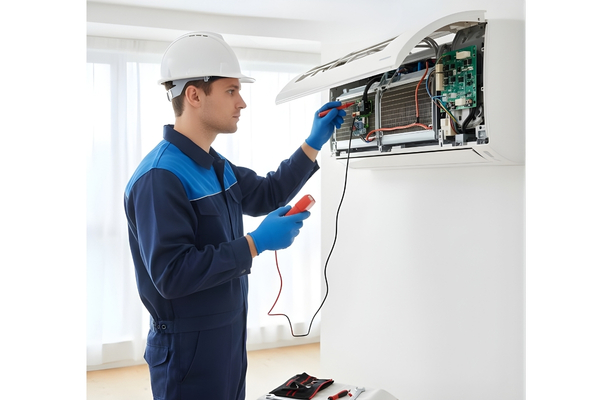
Improper Installation
Unprofessional installation leads to multiple technical issues that affect performance and durability.
- Gas leakage due to improper pipe connections
- Loose fittings causing vibration and noise
- Incorrect wiring affecting system stability
Always choose experienced technicians to ensure correct installation and system efficiency.
Skipping System Testing
Many installations skip proper testing and commissioning, which can lead to hidden issues.
- Performance issues remain undetected
- Cooling efficiency drops over time
- Energy consumption increases
Proper testing ensures your AC runs efficiently from the beginning.
Ignoring Insulation
Poor insulation forces your AC to work harder to maintain room temperature.
- Heat entering through walls and windows
- Lack of thermal insulation
Good insulation reduces cooling load and improves efficiency.
Lack of Maintenance Planning
Not planning maintenance during installation leads to long-term performance issues.
- Dirty systems consume more electricity
- Frequent breakdowns increase costs
- Reduced lifespan of AC components
Detailed Summary
AC installation is not just about fixing a unit on the wall. It is about creating a complete cooling system that is efficient, reliable, and cost-effective.
Mistakes such as wrong AC size, poor airflow planning, incorrect installation, and lack of maintenance directly increase energy consumption and cooling costs.
By avoiding these mistakes and ensuring proper planning, you can improve cooling efficiency, reduce electricity bills, and extend the life of your AC system.
Conclusion
Proper AC installation plays a critical role in overall performance. Small mistakes during setup can lead to higher costs and poor cooling.
By focusing on correct sizing, proper placement, professional installation, and regular maintenance, you can achieve efficient cooling and long-term savings.